
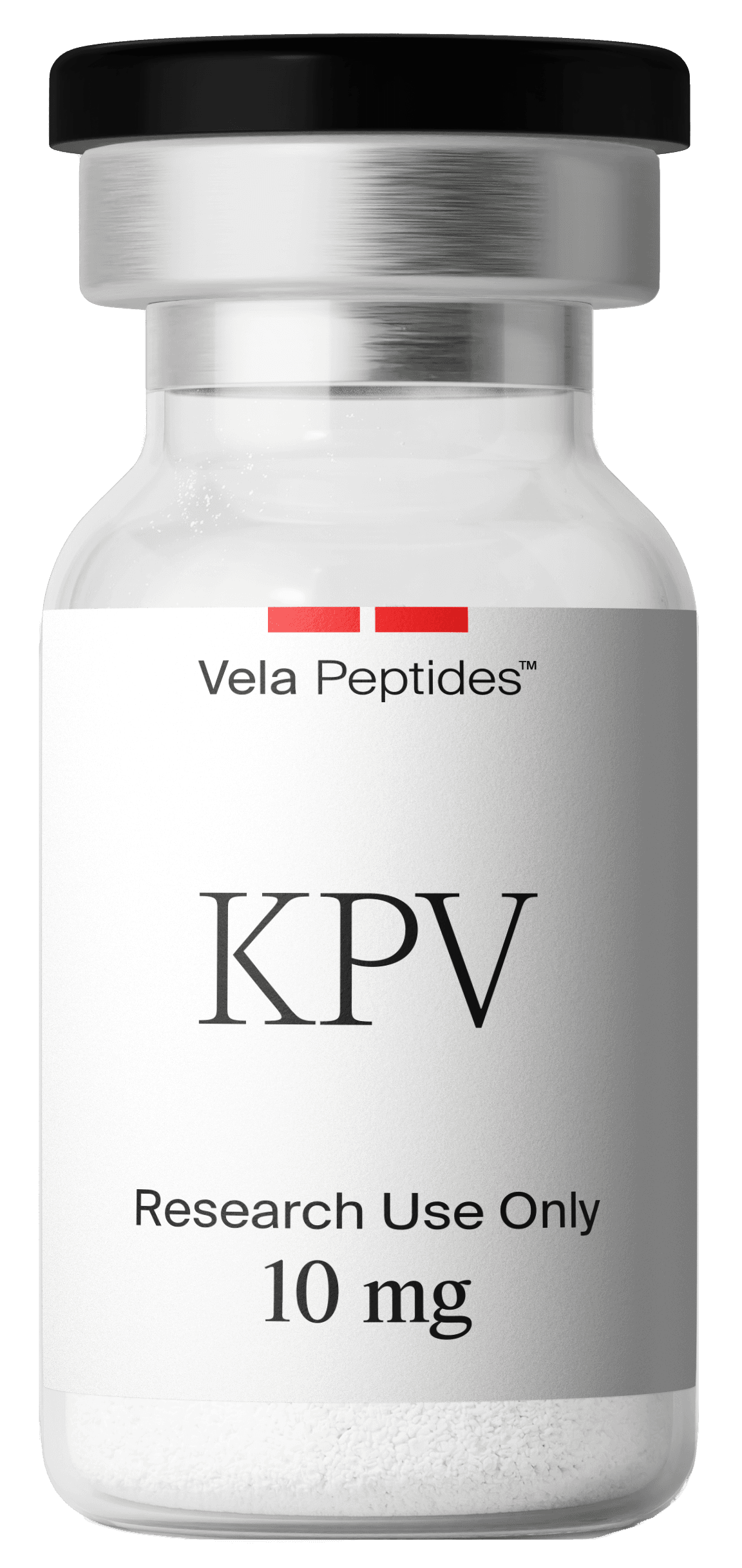
kpv
KPV 10mg
$91.50
For in vitro research only
An anti-inflammatory tripeptide (Lys-Pro-Val) corresponding to the C-terminal fragment α-MSH(11-13), supplied as a 5 mg lyophilized vial for research into melanocortin-pathway signaling, NF-κB modulation, and gut-inflammation models.
Size
Quantity
Promotion
Everything you need to start is included.
New
Technical specification
Key attributes
Each vial is intended for laboratory research use only and is not for human or veterinary use.
Research usage
KPV is investigated as an anti-inflammatory tripeptide derived from the C-terminal region of α-melanocyte-stimulating hormone (α-MSH). In preclinical models, research focuses on its ability to modulate the melanocortin signaling pathway and to dampen pro-inflammatory transcriptional programs. Studies examine how the peptide may interfere with nuclear factor-kappa B (NF-κB) activation and downstream cytokine production in cultured cells. Because it lacks the pigmentary region of the parent hormone, KPV is studied as a tool for isolating anti-inflammatory melanocortin activity from receptor-mediated pigmentation. Additional research explores its uptake by intestinal epithelial cells through peptide transporters as a model of localized mucosal signaling.
Research reports that KPV can reduce markers of inflammation in cellular assays exposed to pro-inflammatory stimuli. In animal research models of colitis, published studies describe attenuated tissue inflammation and reduced infiltration of immune cells following administration of the peptide. Investigators have observed decreased expression of inflammatory cytokines associated with NF-κB signaling in these models. Some reports also note that luminal delivery of KPV in rodent gut-inflammation models is associated with localized activity at the intestinal mucosa. These observations are confined to laboratory and preclinical research contexts and do not establish any effect in humans.
The safety profile of KPV has not been completely characterized and no comprehensive toxicological data are available for this research compound. It should be handled only by qualified personnel trained in laboratory practices and using appropriate personal protective equipment. This material is supplied strictly for in-vitro and preclinical research use and is not for human or veterinary use. Store, handle, and dispose of the peptide in accordance with institutional safety guidelines and applicable regulations.
kpv