
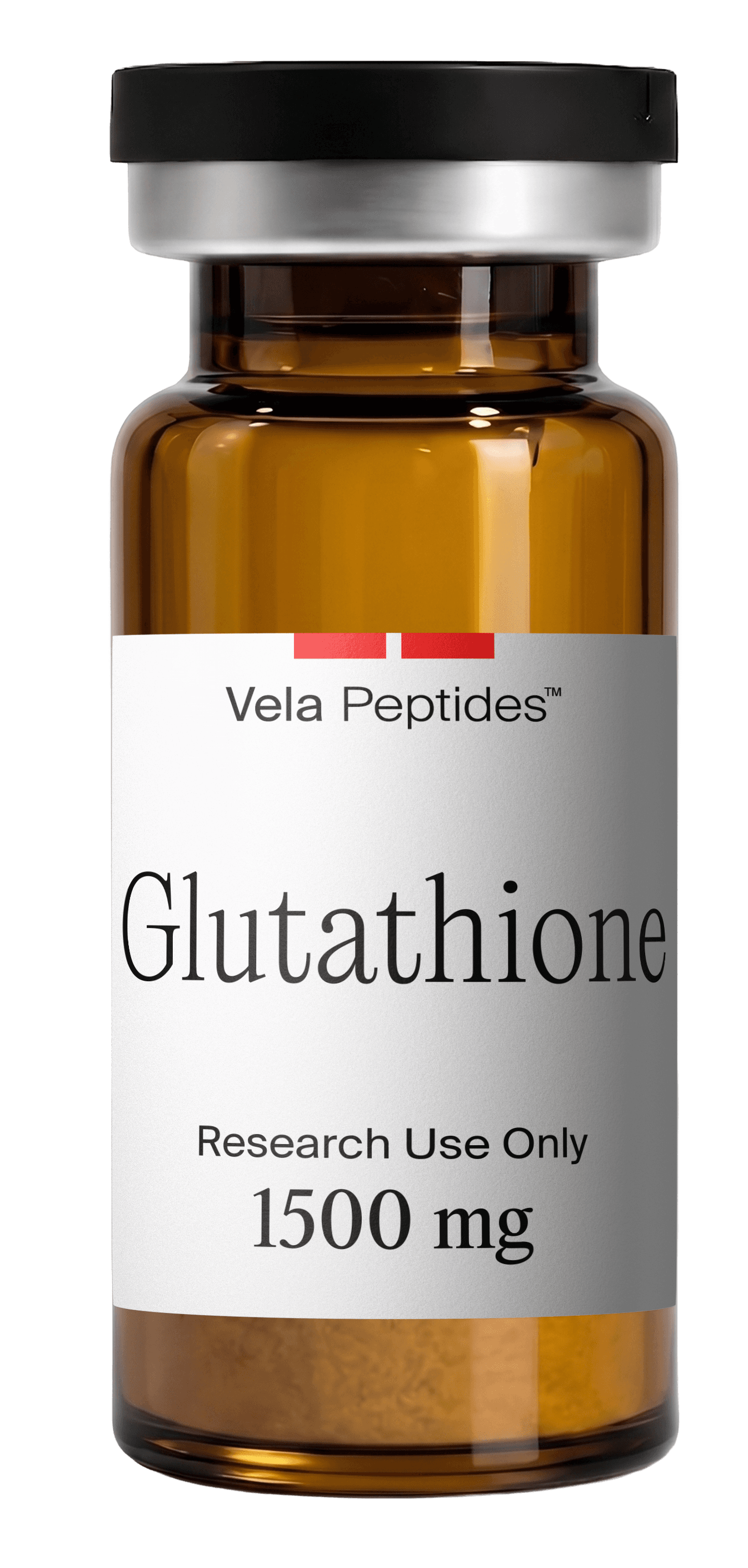
Glutathione 1500mg
For in vitro research only
The principal intracellular antioxidant tripeptide (γ-L-glutamyl-L-cysteinyl-glycine) supplied as a 1500 mg lyophilized vial for research into cellular redox homeostasis, oxidative-stress mitigation, and detoxification pathways.
Quantity
- Free shipping from $300
- Same-day shipping — order before 1 PM
- Secure payment
Promotion
Free 3 ml bacteriostatic water with every order.
Everything you need to start is included.
New
Advanced lab tests
Technical specification
- Molecular formula
- C₁₀H₁₇N₃O₆S
- Molar mass
- 307.32 g/mol
- Purity
- ≥99%
- Synonyms
- GSH, γ-Glu-Cys-Gly, reduced glutathione
- Solubility
- Water-soluble (reconstitute with bacteriostatic water)
- Organoleptic profile
- White to off-white lyophilized powder
- Composition
- Endogenous tripeptide antioxidant — requires reconstitution
Key attributes
Kit contents
- 1 × Glutathione 1500mg vial
- Tamper-evident flip-off cap
- Batch-tested for purity (≥99%)
- Lyophilized for stability during shipping
Each vial is intended for laboratory research use only and is not for human or veterinary use.
Research usage
How is Glutathione 1500mg used in research?
Glutathione (GSH) is investigated as the principal low-molecular-weight thiol antioxidant and intracellular redox buffer of aerobic cells. In preclinical models it is studied for its capacity to scavenge reactive oxygen species and to maintain the reduced thiol status of proteins and enzymes. Research examines its role as a nucleophilic co-substrate for glutathione S-transferases in the conjugation and detoxification of electrophilic compounds. It is also investigated as an electron donor for glutathione peroxidases during the neutralization of peroxides. Additional studies explore the GSH/GSSG ratio as an index of cellular redox homeostasis and oxidative-stress balance in laboratory and animal research models.
Research reports that glutathione is among the most abundant intracellular thiols and that depletion of the cellular GSH pool is associated with increased markers of oxidative stress in laboratory models. In animal research models, alterations in the GSH/GSSG redox ratio have been observed in tissues subjected to oxidative challenge. Preclinical studies report interactions between glutathione and glutathione-dependent enzyme systems during xenobiotic conjugation. Investigations also describe a role for glutathione in maintaining the redox environment required for protein and enzyme function. These findings are observational and pertain strictly to controlled research settings.
The full safety and toxicological profile of this research compound has not been completely characterized. It should be handled only by qualified personnel using appropriate laboratory protocols and personal protective equipment. Reconstituted material should be prepared under aseptic conditions and kept away from oxidizing agents, which can convert reduced glutathione to its disulfide form. This product is supplied for laboratory research use only and is not for human or veterinary use.
Recommended ratio
- 5 mL of bacteriostatic water per 1500 mg vial
- Equivalent to 300 mg/mL (i.e. 30 mg per 10 units on a 100 U insulin syringe)
- A larger diluent volume may be used to lower the concentration for specific research needs
- Disinfect the vial stopper with an alcohol swab and allow it to dry.
- Inject the bacteriostatic water slowly against the inner wall of the vial.
- Gently swirl — do not shake — until the powder is fully dissolved, then store protected from light.
Unopened / before reconstitution
- Store refrigerated (2 °C – 8 °C) and protected from light
- For extended storage, keep frozen (-20 °C)
- Avoid repeated temperature fluctuations
Reconstituted solution
- Store refrigerated (2 °C – 8 °C) and use within the research period
- Protect from light and air to limit oxidation to the disulfide form
- Do not subject to repeated freeze-thaw cycles