
5.011 Feb 2026
Excellent product quality and amazing customer service, with thoughtful follow-up before and during the whole treatment—and I saw incredible results very quickly.
Lilian D.
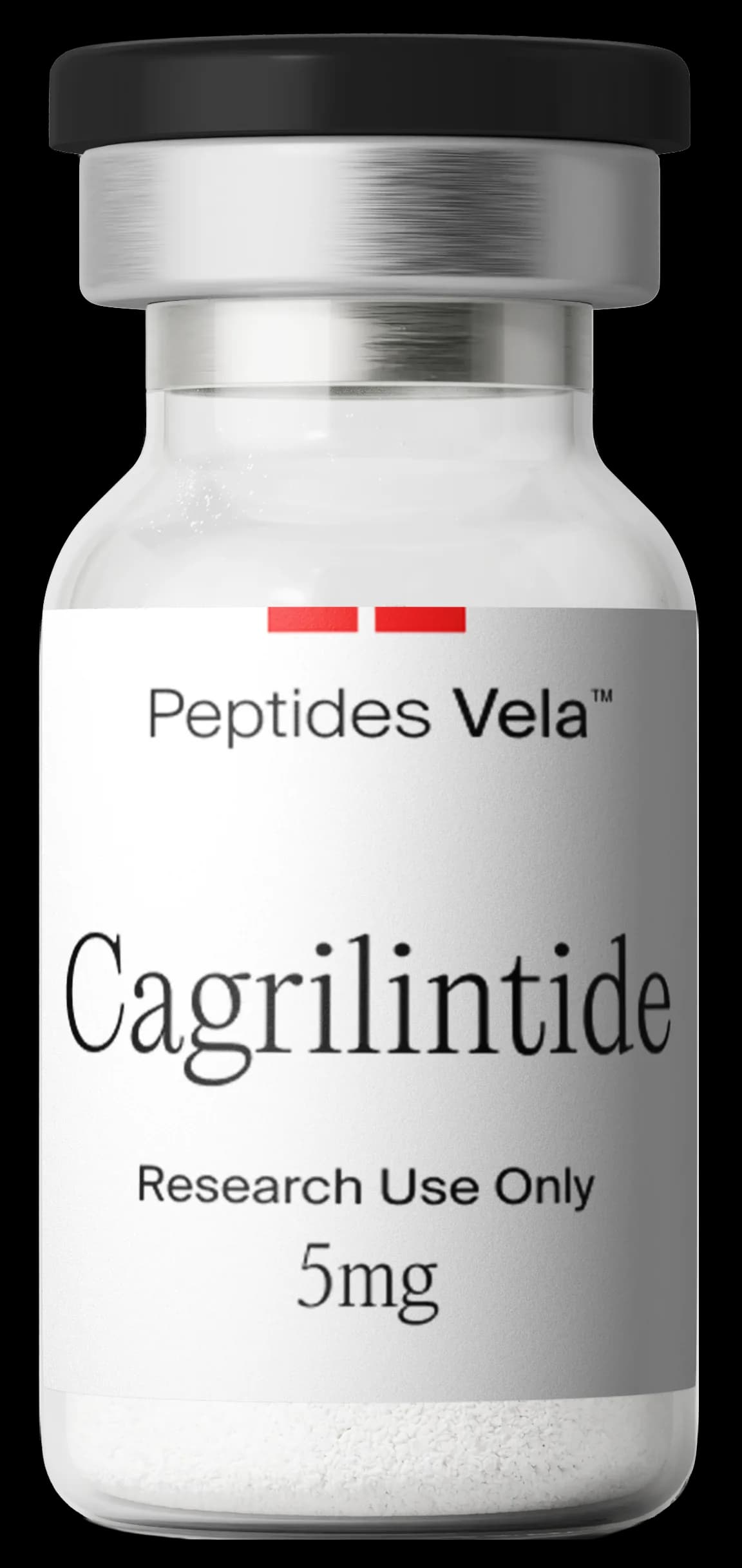
For in vitro research only
Promotion
Everything you need to start is included.
New
Technical specification
Key attributes
Each vial is intended for laboratory research use only and is not for human or veterinary use.
Research usage
Cagrilintide is a long-acting analogue of amylin, a peptide co-secreted with insulin. In animal research it has been studied for obesity and type 2 diabetes, as well as for liver and cardiovascular endpoints. Much research focuses on combining cagrilintide with semaglutide, where the two appear to act synergistically on appetite regulation and body weight.
Testimonials